

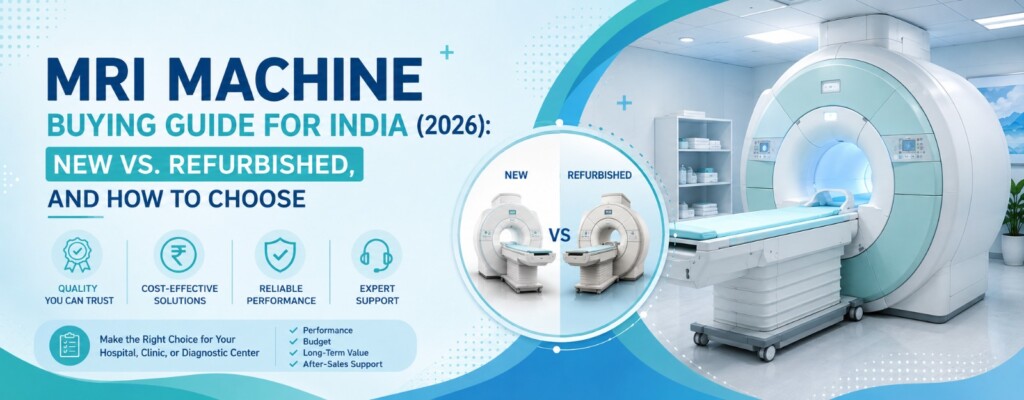
Buying an MRI machine isn’t really a single purchase decision—it’s a stack of smaller ones. Field strength, brand, new vs. refurbished, coil package, site readiness, and who’s going to service the thing in year three all factor in before you get anywhere near a final number. This guide walks through those decisions in order, so you can go into supplier conversations knowing what to actually ask.
What an MRI Machine Does, Briefly
An MRI (Magnetic Resonance Imaging) system uses a magnetic field and radio waves—not radiation—to produce detailed images of soft tissue, joints, the brain, spine, and internal organs. That’s what makes it a go-to for a wide range of diagnostic work and why 1.5T and 3T systems have become the standard configurations across most hospitals and diagnostic centers in India.
What Actually Drives the Cost
There’s no fixed price for “an MRI machine” because no two configurations are quite the same. The main variables:
- Field strength (1.5T vs 3T)
- Manufacturer and model
- New vs. refurbished condition
- Software and clinical application packages
- Coil configuration
- Gradient performance and bore size
- Patient table specifications
- Site preparation and installation scope
- Warranty terms
- Technical support, AMC/CMC, and spare-parts availability
- Transportation and logistics
Because of how many of these interact, a machine-specific quotation is worth far more than any generic market price you’ll find online—including in guides like this one.
New MRI vs. Refurbished MRI
This is usually the first fork in the road, and it shapes most of the decisions that follow.
New MRI machines come with current-generation hardware and software and typically carry manufacturer or supplier warranty options. They tend to make the most sense for new hospitals, large diagnostic centers, tertiary-care facilities, and high-volume imaging centers that need the latest applications from day one.
Refurbished MRI machines are pre-owned systems that have gone through inspection, servicing, component replacement, and performance testing before resale. They’re a reasonable route for facilities trying to manage upfront capital while still getting an established, proven imaging platform—but the value only holds up if you actually check the equipment’s condition, service history, refurbishment process, warranty, and post-sale support. A refurbished system with a thin service backing isn’t actually cheaper; it just moves the cost to later.
Is a Refurbished MRI Machine Reliable?
Generally, yes—provided it’s been properly inspected, serviced, and performance-verified before it reaches you. The reliability question isn’t really “new vs. old”; it’s “how good was the refurbishment, and who’s standing behind it.”
Before buying refurbished, get specific answers on:
- Manufacturer, model, and year of manufacture
- Previous usage and full service history
- Magnet and gradient condition
- Software version and coil condition
- What the refurbishment process actually involved
- Performance testing results
- Warranty terms and installation support
- Spare-parts availability and AMC/CMC options
If a supplier can’t answer these clearly, that’s worth treating as a signal in itself.
1.5T vs 3T: Which One Fits Your Facility?
Field strength should follow clinical need, not the other way around.
1.5T MRI covers the bulk of routine diagnostic work well—brain, spine, musculoskeletal, abdominal, pelvic, and general imaging. For most diagnostic centers, this is the workhorse configuration.
3T MRI delivers a higher magnetic field and can be worth the added investment for facilities with specialized or advanced imaging needs and the patient volume to justify it.
A higher Tesla rating isn’t automatically the better buy. The right call depends on your clinical mix, expected volume, infrastructure, and budget—a 3T system sitting underused is a worse outcome than a well-utilized 1.5T.
How to Choose the Right MRI Machine
A practical sequence for working through the decision:
- Nail down clinical requirements. What examinations and applications will this machine primarily support?
- Estimate patient volume. Expected daily and monthly throughput shapes both configuration and workflow needs.
- Settle on field strength. Match 1.5T or 3T to your actual clinical applications and budget—not the other way around.
- Check the software and applications included. Confirm exactly what clinical packages come with the quoted price.
- Review the coil configuration. Different exams need different coils; make sure what’s proposed actually matches your intended use.
- Assess site infrastructure. Room layout, electrical capacity, shielding, cooling, and access all need to be planned before the machine arrives.
- Weigh after-sales support. Technical response time, preventive maintenance, and spare-parts access matter more over five years than the sticker price does on day one.
What Installation Actually Involves
MRI installation is a project in its own right, not a delivery-and-plug-in job. Depending on the site and system, planning typically covers:
- MRI room design and RF shielding
- Electrical infrastructure and HVAC/cooling
- Equipment access routes and control room setup
- Patient preparation areas
- Safety requirements and, where applicable, quench pipe planning
- Transportation, installation, and commissioning
A proper site assessment before the machine is ordered catches most of the infrastructure surprises before they become costly change orders.
Keeping the Machine Running: Maintenance and Support
Once installed, ongoing reliability comes down to maintenance discipline more than the equipment itself. Worth having in place:
- Preventive and corrective maintenance schedules
- Direct technical and software support lines
- Confirmed spare-parts availability for your specific model
- Regular performance testing and calibration
- An AMC or CMC arrangement with clear response-time commitments
When comparing suppliers, the service package deserves as much scrutiny as the equipment quotation — a slightly higher price with faster support and better parts access is often the better deal.
Pre-Purchase Checklist
Before signing anything, confirm:
- Manufacturer and model
- New or refurbished condition
- Magnetic field strength
- Year of manufacture
- Software configuration
- Coil configuration
- Gradient specifications and bore size
- Patient table capacity
- Installation requirements
- Warranty coverage
- Service response commitments
- Spare-parts availability
- AMC/CMC options
- Full service history (for refurbished systems specifically)
Running every quote through this list makes it much easier to compare suppliers on substance rather than just headline price.
So, New or Refurbished?
There’s genuinely no universal right answer here. New systems suit facilities with the capital for current technology and a long equipment horizon. Refurbished systems suit facilities that want to manage capital expenditure while still getting a properly inspected, professionally supported system.
The deciding factors are the same ones that shape the rest of this decision: clinical requirements, patient volume, budget, infrastructure, service availability, and how long you plan to run the equipment before upgrading again.